Knee Replacement | Ghaem Hospital

Knee Replacement Surgery

Ghaem Hospital Orthopedic & Joint Reconstruction Center

About the Procedure

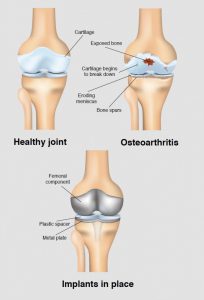
Knee replacement surgery, also known as knee arthroplasty, is performed to replace damaged parts of the knee joint with artificial components. This procedure is typically recommended for patients suffering from severe arthritis, chronic pain, or limited mobility that does not respond to conservative treatments. Both total and partial knee replacements are performed depending on the extent of joint damage.

Common Reasons for Knee Replacement

  • Severe osteoarthritis
  • Rheumatoid arthritis
  • Knee deformities
  • Chronic knee pain affecting daily activities
  • Traumatic injury leading to joint damage

Before the Procedure

  • Medical evaluation and imaging (X-ray or MRI)
  • Blood tests and heart assessment if necessary
  • Discuss medications and stop blood thinners if instructed
  • Fasting 6–8 hours before surgery
  • Physical therapy may be recommended before surgery to strengthen muscles

During the Procedure

  • Performed under spinal or general anesthesia
  • Damaged cartilage and bone are removed
  • Artificial implants (prosthesis) are placed to restore knee function
  • Typical surgery time: 1–2 hours

After the Procedure (Post-Operative Care)

Recovery after knee replacement varies, but most patients are able to walk with assistance within 24 hours. Full recovery may take 4–8 weeks depending on physical therapy and overall health.

  • Begin physical therapy as directed
  • Use walking aids (walker or crutches) as needed
  • Keep the surgical site clean and dry
  • Ice therapy may help with pain and swelling
  • Avoid climbing stairs excessively in the early recovery period
  • Take prescribed medications regularly

Possible Complications

  • Infection
  • Blood clots
  • Joint stiffness
  • Implant loosening (rare)
  • Nerve or vessel injury (very rare)

When to Contact Your Doctor

  • Severe pain or swelling
  • High fever
  • Redness or drainage at the surgical site
  • Difficulty walking that worsens
  • Shortness of breath (possible sign of blood clot)