Coronary angiography (CAG)
Coronary Angiography (CAG) | Ghaem Hospital

Coronary Angiography (CAG)

Ghaem Hospital Cardiology & Heart Diagnostic Center

About the Procedure

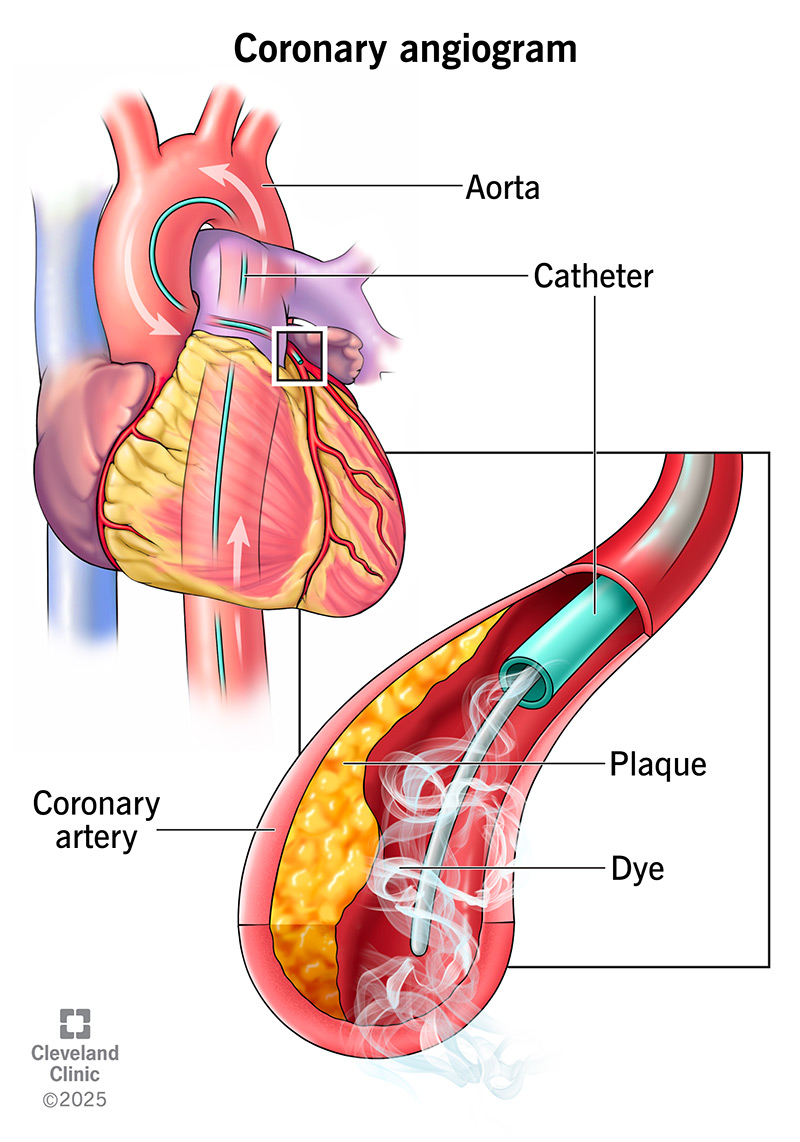
Coronary Angiography (CAG) is a specialized imaging procedure used to visualize the coronary arteries—the vessels supplying blood to the heart. By injecting contrast dye through a catheter and capturing X-ray images, doctors can identify blockages, narrowing, or other abnormalities. CAG is essential for diagnosing heart conditions and planning treatments such as angioplasty or stent placement.

Common Reasons for CAG

  • Chest pain (angina)
  • Shortness of breath
  • Abnormal stress test results
  • Suspected coronary artery disease
  • Heart attack evaluation
  • Pre-surgical cardiac assessment

Before the Procedure

  • Do not eat or drink 6–8 hours prior to the procedure
  • Inform your doctor about medications, allergies, and past heart conditions
  • Blood tests and ECG may be required
  • Stop certain medications if instructed
  • Shaving of the wrist or groin area may be done for catheter insertion

During the Procedure

  • A catheter is inserted through a wrist (radial) or groin (femoral) artery
  • Contrast dye is injected to visualize coronary arteries
  • The procedure typically lasts 20–40 minutes
  • Patients are usually awake but sedated

After the Procedure (Post-Operative Care)

Recovery after CAG is usually quick, particularly for radial-access procedures.

  • Rest for several hours after the procedure
  • Keep the catheter insertion area clean and dry
  • Avoid heavy lifting for 24–48 hours
  • Drink plenty of fluids to flush contrast dye from the body
  • Report any swelling, pain, or bleeding at the insertion site

Possible Complications

  • Bleeding at the catheter site
  • Allergic reaction to contrast dye
  • Irregular heartbeat
  • Blood vessel damage (rare)
  • Heart attack (very rare)

When to Contact Your Doctor

  • Increasing pain or swelling at the catheter site
  • Shortness of breath
  • Chest pain
  • Fainting or dizziness
  • Fever or chills